
SEO Basics for a Small Business in Iran
Why can't customers find your business site on Google? Simple SEO basics: page titles, descriptions, real content and technical points that matter in Iran.
 Habib S. · Ldora
Owners of cafés, shops and wholesale businesses often ask me the same thing: "I have a website, so why doesn't anyone find me on Google?" Usually the problem is not budget or advertising. The site simply never tells Google what it is about, and it has no content anyone is searching for. Here are the SEO basics for a small business in Iran: page titles, descriptions, real content, and a few technical points that matter even more with Iran's internet conditions.
What SEO means for a small business
SEO means that when someone asks a question you can answer, your page shows up among the answers. A local business does not need to beat national websites. It only needs to be visible for specific searches close to its work, such as "diet café Shiraz" or "healthy food with calories listed".
I think of SEO in three layers:
- Technical: the site opens, loads fast, works on a phone and uses HTTPS.
- Introduction: every page has its own title and description.
- Content: each page offers something real and useful that people look for.
If the first layer is broken, the other two barely matter. If the third is empty, the first two just build a tidy, empty shop window.
Titles and descriptions: what people see first
In Google results, each page shows a title (the blue line) and a description (the lines under it). You write these yourself. If you don't, Google picks some text from the page that may not fit at all.
What I follow for every page:
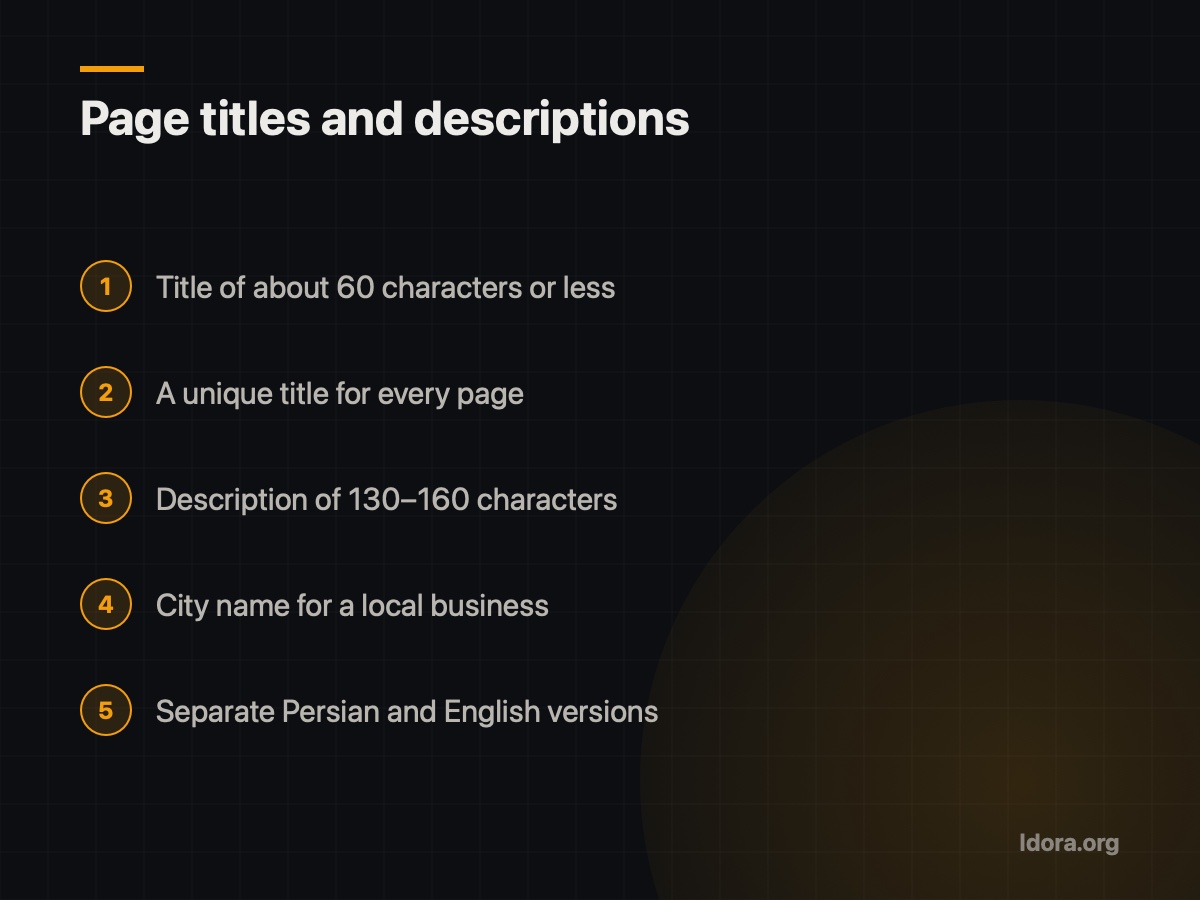
- A short, specific title, around 60 characters or less, using words people actually search. "Home" or "Welcome" is not a title.
- A unique title per page, so Google knows which page answers which question.
- A description of about 130–160 characters: one clear sentence on what the page offers and why it is worth a click.
- The city name for local work, placed naturally in the title or description.
- Bilingual sites: the Persian and English versions each need their own title and description, not a machine translation of each other.
Real content: what only you can write
The most common mistake I see is pages full of generic phrases: "best quality", "fair prices", "customer satisfaction". Any site can write those, so Google has no reason to rank you above anyone else.
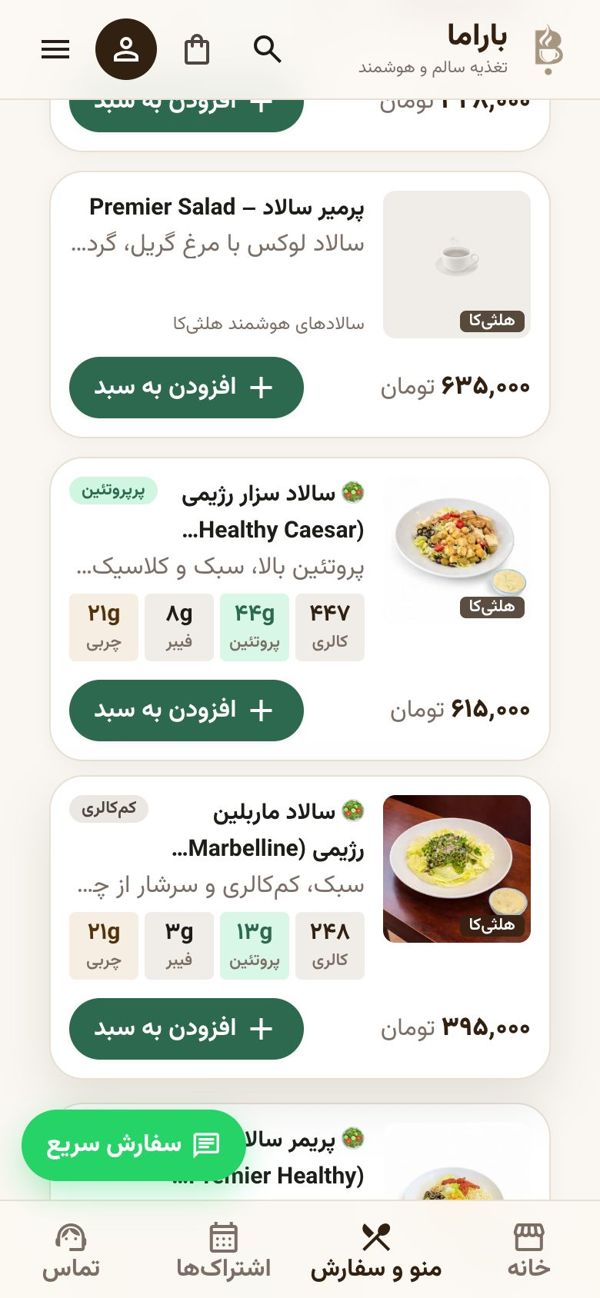
Good content is information only you have. A real example from my own work: on Cafe Barama's site in Shiraz, every dish shows its calories, protein, carbs and fat, and the cart adds up the nutrition of the whole order. That helps customers, and it is exactly what people on a diet are searching for. You can see this work on the Barama app page.
Ideas for other businesses:
- Shops: give each product a real description, not just a name and a photo.
- Wholesalers: a full catalogue with clear categories and search that understands typos.
- Any business: answer once, on your site, the questions customers ask you on the phone every day.
Technical basics that matter more in Iran
Iran adds another layer: filtering and unstable internet. A site that loads slowly or half-breaks for local visitors loses customers and looks worse to search engines.
In my projects I do the following:
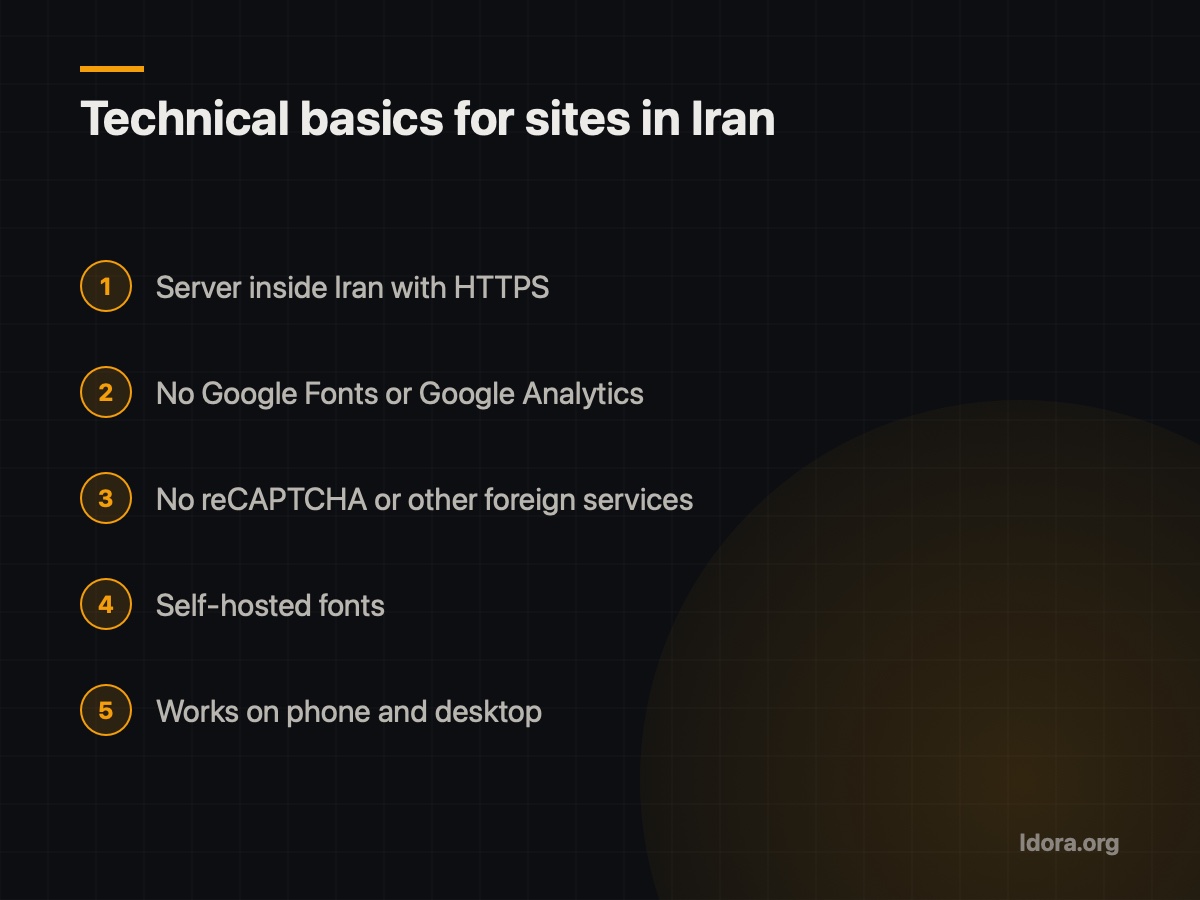
- Sites run on a server inside Iran with HTTPS.
- No Google Fonts, Google Analytics, reCAPTCHA or other foreign services that break under filtering.
- Fonts are self-hosted, so pages never wait on a foreign server.
- Layouts work on both phone and desktop, since most customers will see your site on a phone.
Where to start
You don't have to fix everything overnight. First, make sure the site opens fast on a phone over local internet. Then write proper titles and descriptions for your main pages. After that, add one real, useful page each week: a product with a full description, an answer to a common question, or a clear explanation of a service. SEO is not a one-day job; it comes from pages added over time, each answering a real question.
A short checklist for your own site:
- The site opens fully and quickly on a phone over local internet
- The site uses HTTPS and shows the lock icon
- Every page has its own title (around 60 characters or less)
- Every page has a 130–160 character description
- At least one page offers information only your business can give
- The site does not depend on foreign services that break under filtering
If you want a business site built on these basics from day one, or want us to look at your current site together, request a free demo. You see real work before you decide anything.
Want something like this?
Tell me about your business
More guides
Mobile-First: Your Customers See Your Site on a Phone
For most local businesses, the customer's journey starts on a phone. Here is what mobile-first design means and how I apply it in my projects.
Read
Café Online Ordering: Your Own Site or Snappfood?
Snappfood is a marketplace; your own ordering site is your home. From building Cafe Barama's system: what each one does and when you need both.
Read
Sayad Cheque and Instalment Reminders: Never Miss a Due Date
Why cheque and instalment due dates get missed, and what a good reminder system needs, from building Wealth with SMS reminders and a private document vault.
Read